
THE RAPPAHANNOCK RIVER COMPANY
The State of New Construction
Explore the data and trends powering the architecturally designed new construction housing market in the Mid-Atlantic
TRUSTED BY LEADING DESIGN PROFESSIONALS




THE STATE OF NEW CONSTRUCTION
Key Insights
Explore key insights about the architecturally designed new construction homes in the Mid-Atlantic for the year ending 2025
AVERAGE FINISHED LOT SIZE
0.93 Acres
The average finished lot size for architecturally designed new construction homes
AVERAGE PRICE PER FINISHED SQUARE FOOT
$435.41 Sq. Ft.
The average price per finished square foot for architecturally designed new construction homes
AVERAGE SALE PRICE
$2.45 Million
The average sale price for architecturally designed new construction homes
THE STATE OF NEW CONSTRUCTION
Executive Summary
From the salty environs of Maryland’s Eastern Shore to the rolling hills of Virginia Hunt Country, the Mid-Atlantic has long occupied a singular place in the American landscape. It is a region defined not only by beauty, but by balance — where historic towns and working waterfronts coexist with global institutions, vibrant cultural centers, and enduring traditions of craftsmanship.
Anchored by a dynamic employment base, a nationally respected mix of public and private schools, and an unparalleled position along the Eastern Seaboard, the Mid-Atlantic continues to attract those seeking both opportunity and permanence. For many, it is not simply a place to live, but a place to invest — thoughtfully, intentionally, and for the long term.
So, whether you are considering the creation of an architecturally designed home or you are a design professional looking to deepen your understanding of today’s high-end construction market, we invite you to explore our 2025 State of New Construction report.
What follows is a closer look at how land, design, and execution are shaping the future of residential construction at the highest levels of the market.
In this annual report, we examine the Mid-Atlantic’s architecturally designed new home market. Using first party sales data, we use data driven insights and curation to isolate the market for architecturally designed homes where land economics, design quality, and execution materially shape outcomes.
As you will see, what emerges is a clear picture of how value is being created (and constrained) across distinct locales, and how interior designers, residential architects, custom home builders, and landscape architects can adapt their strategies accordingly to capture this valuable customer base.
Core Metrics and Methodology
The analysis in the 2025 State of New Construction is grounded in a small set of highly revealing metrics.
First, using a sample of over 450 transactions across several key geographic regions throughout the Mid-Atlantic, we analyze the total sale price of each property to obtain an aggregate of transaction volume in each core sub-market.
Next, we look at the average price per finished square foot, a critical efficiency measure calculated by dividing total sale price by total finished square footage (including both above- and below-grade space).
As a proxy for land value premium and to assess the relative weight of land versus construction cost, we also look carefully at price per developed acre by sale price by acreage.
And finally, as measure of market depth, liquidity, and sustained demand, we take a look at total transaction volume.
To add additional value to design professionals, we also leverage data from the National Association of Home Builders (NAHB) Cost of Construction Survey to achieve a floor price for new home construction — a useful filter that allows us to focus on transactions that align more closely with architecturally designed homes.
Together, these metrics allow for a comparative view of how land scarcity, construction quality, and market velocity interact across our sample markets to obtain a clear picture for the Mid-Atlantic region at large.
Strategic Market Profiles
The data in the 2025 State of New Construction reveals three distinct market archetypes, each driven by a different set of economic pressures.
First, the the urban and close-in suburban markets, such as Washington, D.C., Bethesda, Maryland, and Chevy Chase, Maryland, where land scarcity is the defining constraint, resulting in high land prices and little margin for inefficiency.
For the design professional navigating these maximum density markets, success depends on extracting maximum utility from limited parcels. Residential architects, interior designers, and custom home builders must prioritize total finished square footage, often extending value below grade through high-quality, fully finished basements while landscape architects must prioritize refined, high-impact solutions such as vertical gardens, integrated hardscaping, and outdoor rooms designed to perform on minimal footprints. Here, every square foot must justify its existence.
In markets like Coastal Delaware, particularly the desirable enclaves of Rehoboth Beach, Delaware, Bethany Beach, Delaware, and Fenwick Island, Delaware — where the average price per developed acre reaches as high as $28.59 Million — land cost overwhelmingly dictates project economics. In this unique market, design decisions must align with and elevate the intrinsic value of the site through maximization of water views, coastal resilience, material durability, and architectural presence. The land sets the budget, and the home must rise to meet it.
And finally, in powerhouse markets like Bethesda, Maryland and McLean, Virginia, which comprise 28% of all transaction volume in our sample while also commanding some of the highest average total finished price per square foot figures (at $513.02 and $457.37 respectively), a pronounced willingness to pay for construction quality, design integrity, and premium finishes is clear.
A Comparison to Local and National Benchmarks
The transactions analyzed within this report do not include detailed cost breakdowns, we can use the NAHB's national ratios to infer the scale of costs we see for architecturally designed new construction homes.
For instance, the largest share of the sales price of a new construction home in the NAHB study — a commanding 64.4% – is attributable to direct construction costs, which translates to an estimated $1.58 Million for the average home in our dataset. This figure underscores a critical truth for end users and design professionals alike: design and execution choices directly dictate the dominant component of project feasibility and profit.
Another example includes finished lot costs, which account for 13.7% of the sales price in the NAHB study (or approximately $336,074 for the average property in our data set). For the architecturally designed new construction homes in our data set, finished lot cost share is substantially higher than the national average, potentially being the most significant driver of the total price premium and highlighting the importance of site planning and efficient land use to maximize the return on investment.
With a national average of 11.0% (or an estimated $269,840 when applied to our data set), builder profit must be considered in directly correlation with excellence in cost management and the ability to deliver differentiated value that justifies the high price.
The remaining 10.9% (or approximately $267,387 when applied to our data set) is allocated to “other costs” that correlate to overhead, sales commissions, and marketing the new home. For the boutique design professional who is creating a custom home, these costs may be associated with specialty or premium services rendered throughout the project, such as construction administration, material selection and procurement, and quality control.
For the design professional and prospective custom home owner, we hope these benchmarks offer key insights for navigating the market.
THE RAPPAHANNOCK RIVER COMPANY
The Homes Collection
Explore a curated collection of the most iconic homes in the Mid-Atlantic
THE STATE OF NEW CONSTRUCTION
Power Rankings
Discover the top Mid-Atlantic’s top markets for architecturally designed new construction homes by finished price per square foot
1). Rehoboth Beach, Delaware
2). Long Beach Township, New Jersey
3). Surf City, New Jersey
4). Washington, D.C.
5). Princeton, New Jersey
6). Manahawkin, New Jersey
7). Chevy Chase, Maryland
8). Bethesda, Maryland
9). Wayne, Pennsylvania
10). Arlington, Virginia

Randall Kipp, Principal of Randall Kipp Architecture in Irvington, Virginia
PARTNER INSIGHT
“The data and insights in The State of New Construction report serves as an invaluable resource to our boutique practice.”
— Randall Kipp, AIA

THE RAPPAHANNOCK RIVER COMPANY
Introducing Benchmark
Benchmark is the working tool for design professionals building custom homes in the Mid-Atlantic
THE RAPPAHANNOCK RIVER COMPANY
Find a Trusted Design Professional in the Mid-Atlantic
Discover the very best Residential Architects, Custom Home Builders, Interior Designers, and Landscape Architects in the Mid-Atlantic, including members of our Partner Network
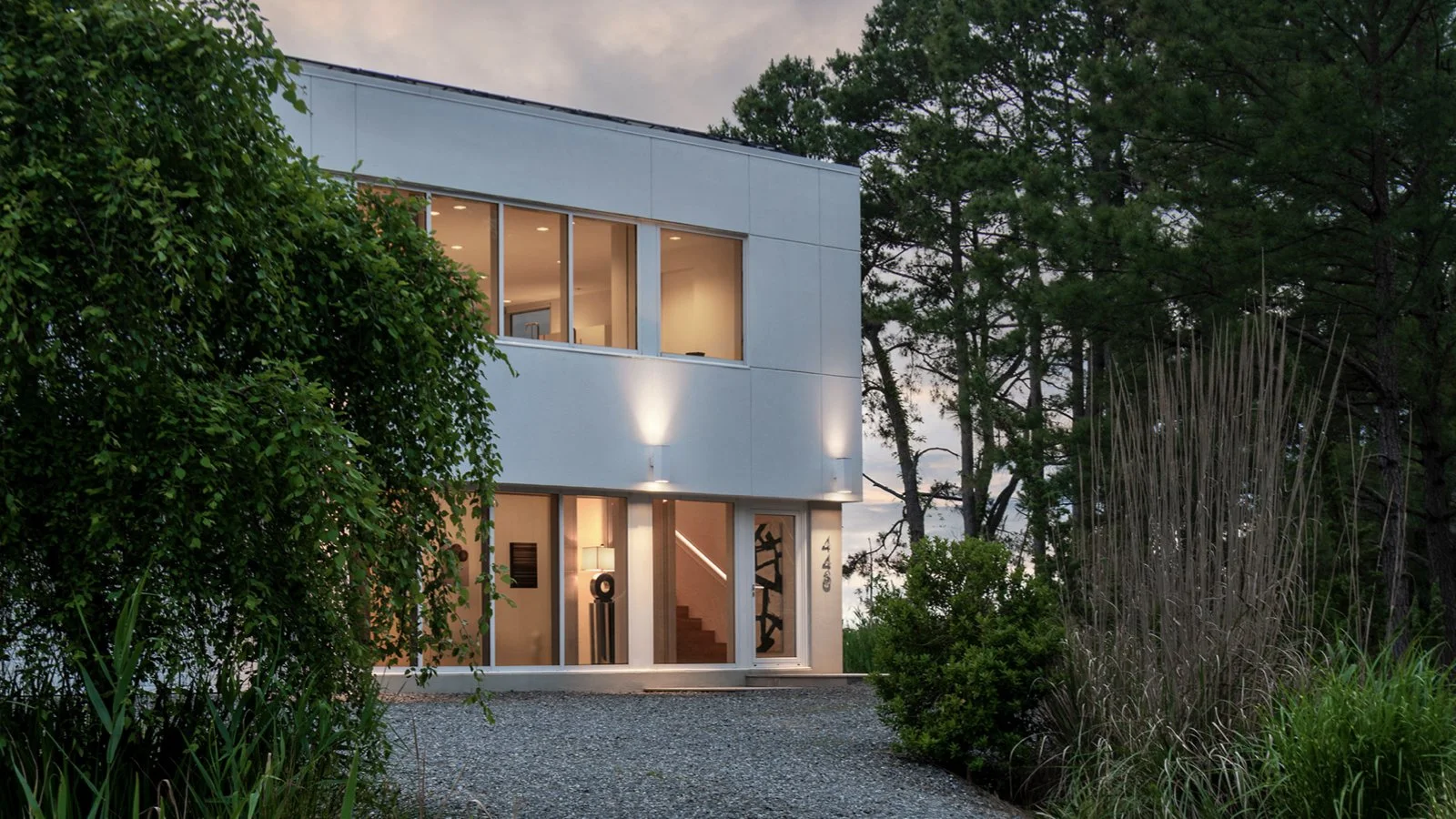
Windjammer of White Stone, Virginia. Image courtesy of Anice Hoachlander.
IRVINGTON, VIRGINIA · PARTNER NETWORK
Randall Kipp Architecture
Randall Kipp Architecture is a Residential Architecture Firm in Irvington, Virginia
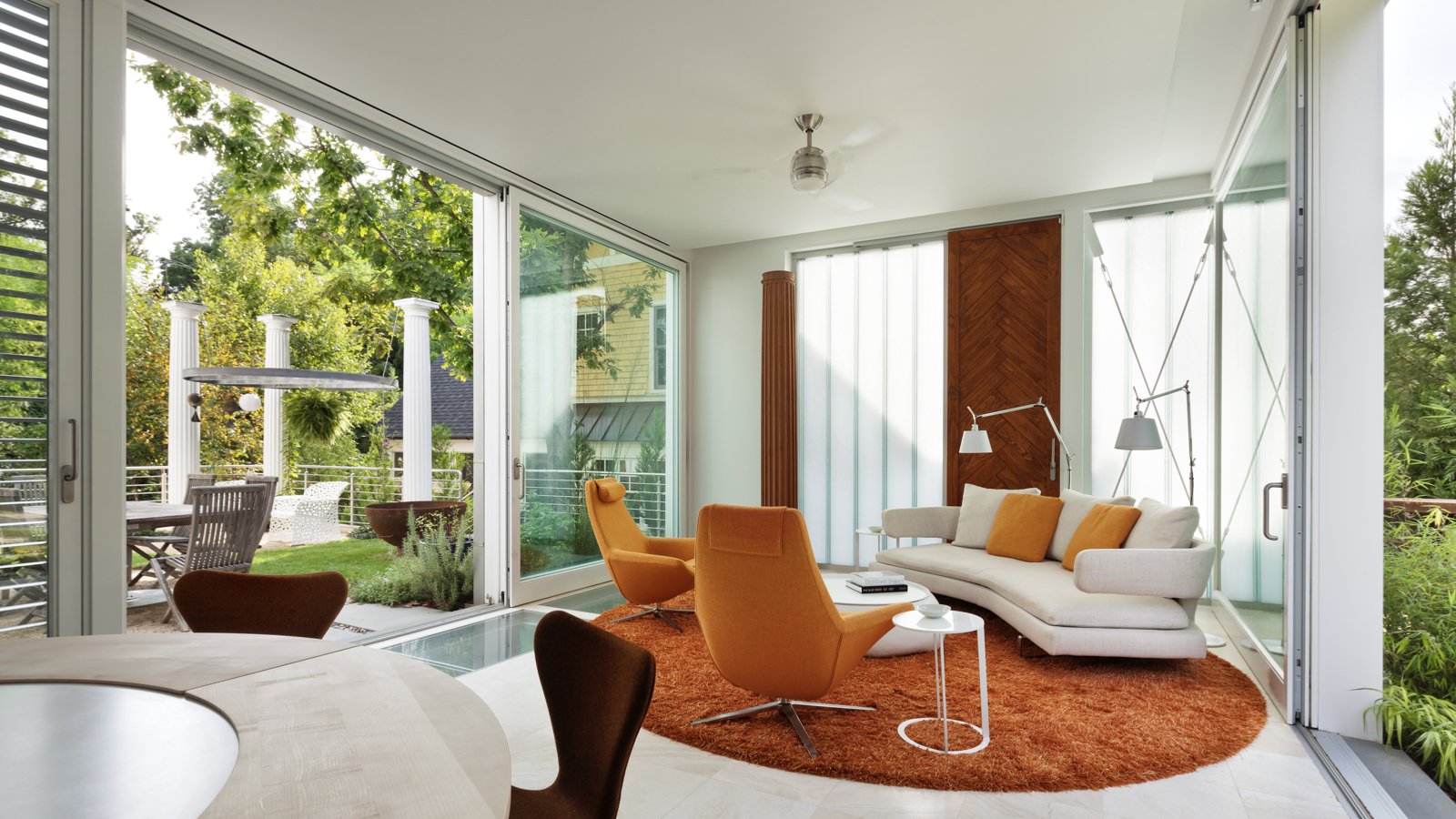
Natural Sanctuary of Chevy Chase, Maryland. Image courtesy of Michael Moran.
HYATTSVILLE, MARYLAND · PARTNER NETWORK
CLINTON+RIES Landscape Architects
CLINTON+RIES Landscape Architects is a Landscape Architecture Firm in Hyattsville, Maryland

Wing House of Bethesda, Maryland. Image courtesy of Michael K. Wilkinson.
WASHINGTON, D.C. · PARTNER NETWORK
ARCHI-TEXTUAL
ARCHI-TEXTUAL is a Residential Architecture Firm in Washington, D.C.
THE STATE OF NEW CONSTRUCTION
Frequently Asked Questions
Browse frequently asked questions about our industry research, data, and reporting methodologies
HOW DO I GET ACCESS TO YOUR INDUSTRY RESEARCH?
Full access to home sales, land sales, and industry benchmarking is available through Benchmark, an exclusive workspace available to members of our Partner Network.
WHAT KIND OF DATA IS INCLUDED IN YOUR INDUSTRY RESEARCH?
Industry research and reports include a variety of data, including anecdotes regarding the business of new home construction from industry professionals, as well as a complete list and data set of all new construction homes in the market.
WHAT ARE THE SAMPLE MARKETS USED IN THE REPORTING?
The markets that comprise this report include Virginia, Maryland, Washington, D.C., New Jersey, West Virginia, Delaware, and Pennsylvania.
HOW DO I SPONSOR YOUR INDUSTRY REPORTS?
Market data and research may be sponsored upon request by qualified design professionals. To learn more, please complete the form below.
WHAT CRITERIA IS USED TO ACQUIRE DATA FOR THE REPORT?
Sales data is acquired from closed sales records published by Bright MLS. In addition, the report focuses only on detached single family homes — specifically those marked as fee simple transactions. The report also excludes transactions that are in Home Owner Associations (HOA), which are overwhelmingly representative of production builders. To add additional scrutiny, we also filter out any transaction where the finished price per square foot and sale price is less than the national average as published by the National Association of Home Builders. Finally, we filter out any transactions which do not have recorded above grade square footage or were not built within the last two years, which are typical of renovations rather than net new construction.
HOW DO YOU ACQUIRE DATA FOR YOUR REPORTS?
Data for our reports is acquired through a combination of public, private, and panel-based sources.
HOW CAN I USE THIS DATA?
The data in our report offers many benefits to design professionals, including intimate knowledge of regional market trends and market sales data to inform project pricing and estimation.
THE STATE OF NEW CONSTRUCTION
Download the Complete Data Set
Learn more about the new construction housing market in the Mid-Atlantic. Download a CSV of the complete data set today.