
THE RAPPAHANNOCK RIVER COMPANY
How to Find Land for Your Next Custom Home
These timeless strategies will help you find the perfect site for your next custom home
How to Find Land for Your Next Custom Home
If you are considering building a custom home, there are many exciting decisions to make — most important of which is the location of your home.
But for those looking for a great lot, where do you start?
In this article, we focus on the specific questions and considerations you should make when considering a building lot for your next custom home, including identifying a specific geographic area, hiring the right team, finding your perfect lot, and the diligence required to underwrite the feasibility of the site for your next custom home.
For those who are ready to build their next custom home, but want to learn more about how to find the perfect parcel, we trust you will find these tips and best practices to be helpful.
Identify your desired location — and lifestyle
When you are considering building a custom home, it’s exciting to think about the architectural style, the various finishes, and the memories you will create once you’ve settled in.
However, the most important element to consider when building a custom home is not necessarily what you will build — but why.
Indeed, as you consider the location of your next custom home, it’s important to ask what attracts you to this specific region or location.
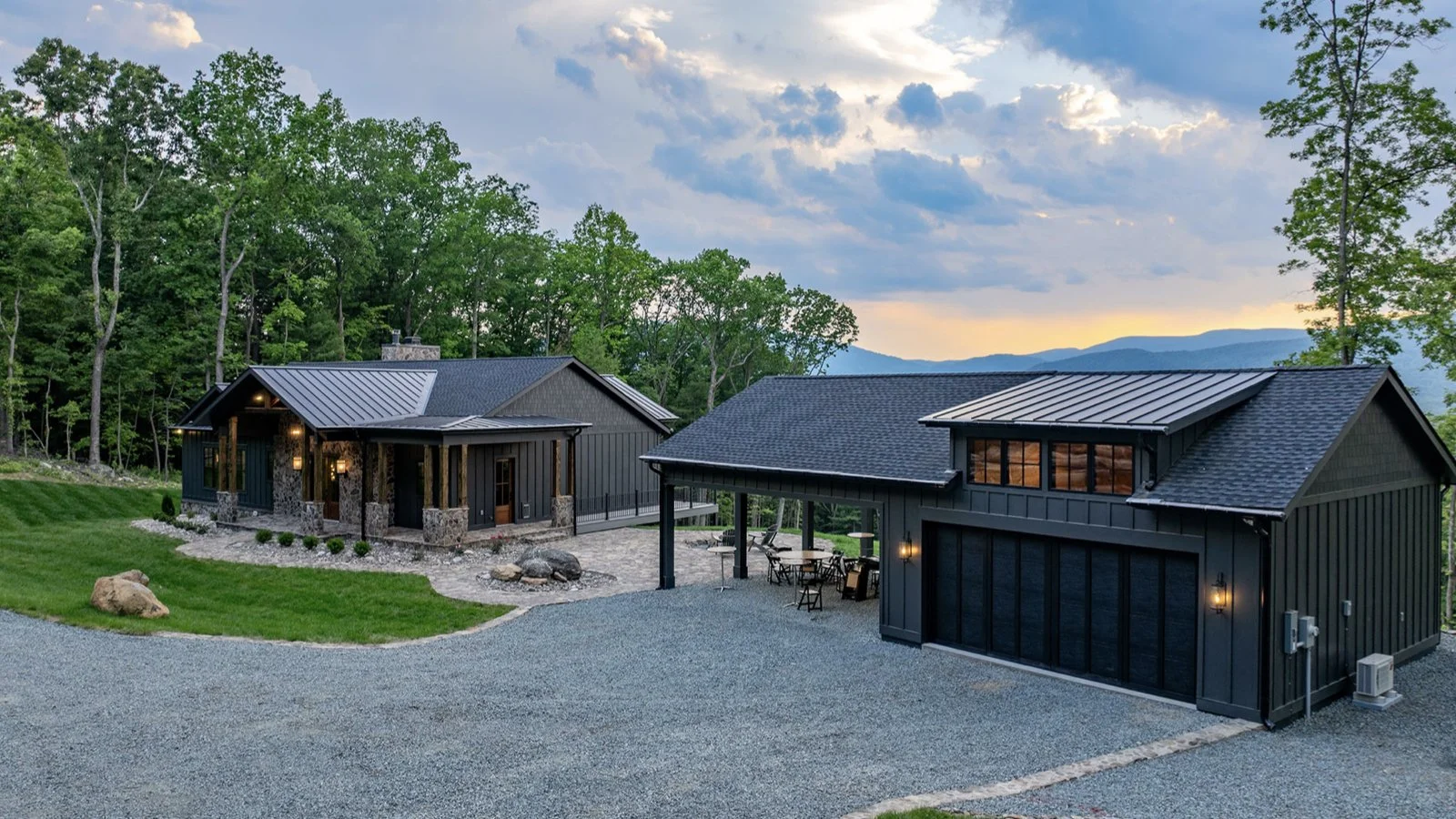
Whether you seek a rustic mountain retreat in Virginia’s Shenandoah Valley or a charming cottage along the trickling streams of Maryland’s Eastern Shore, committing to a specific location will be critical to helping assess the ideal parcel for your next home, the the team to help make your vision a reality, and the lifestyle you aim to achieve once complete.
So, before you get too far into the process of making offers and creating sketches, take some time to explore the geographic area you hope to call home. Is it close to the people and places who matter to you? Are you going to make this your primary residence, a second home, or a weekend escape? And are you genuinley excited about the process of building a custom home?
In choosing a location for your next custom home, you are also choosing a lifestyle that in many ways is shaped by the place in which you inhabit. So before buying land and designing your dream home, spend time at the local diner or coffee shop. Take a chance to chat with some of your future neighbors at the local yacht club or golf course. And consider staying for an extended period of time at a hotel or inn that may give you a sense of the rhythm and pace of life during a Monday morning, or a Thursday afternoon.
Finally, make sure you are on the same page with your partner, your spouse, or your significant other. In the process of building a custom home, the vision drives the initial spark, but alignment gets you to the finish line.
By investing upfront in the “why” we help refine our vision for the life we hope to live — and the home we will build to support it.
Hire the right team
Once you’ve identified your ideal location for your next custom home, it’s always a good idea to engage with a local real estate agent who specializes in the market as well as a trusted design professional such as a residential architect or a custom home builder.
While you as the end user should have a good idea of your ideal location, budget, and maybe even the style of home by this point, a trusted design professional with experience designing and building homes in your desired location will be an invaluable resource to engage with from the outset.
Typically, between your residential architect, your custom home builder, and your real estate agent, you will be able to discern which lots are suitable and which are best to be avoided based on a combination of local market expertise and previous knowledge of the property which, anecdotally, helps underwrite the opportunity.
As an example, a great lot may feature beautiful views, convenient access to utilities, proximity to essential services such as shops, schools, and hospitals, mature trees and water features such as ponds, lakes, or streams. Conversely, a challenging lot, may feature steep slopes, proximity to high voltage power lines and flood zones, or significant noise and light pollution from nearby traffic or industry that may impact your lived experience.
A common method to find land to build your next custom home is finding raw land or a vacant parcel for sale on the public market.
Land may also be available for sale through a custom home builder or real estate developer, who may have land for sale as a benefit of working with them to design and build your next custom home.
Lots and parcels may also be made available through other more creative measures, such as buying a lot with an existing structure still on it and tearing it down or renovating.
If you purchase land in a real estate development or branded residence such as The Greenbrier Sporting Club or Primland Residences, you will have the benefit of working with a representative who has a deep understanding of the land and the associated possibilities.
“It’s natural to be excited about designing your future home, but resist the urge to start planning before securing the land,” says Ben Robbins, AIA, Founder of Pillar & Perch: Architects + Builders in Charlottesville, Virginia.
“The characteristics of a property — the topography, views, access, privacy, and local regulations — play a crucial role in determining the layout and design of your home.”
Whichever path you choose, be sure to have your team assembled in advance to help provide due diligence prior to writing an offer and remain open to multiple avenues to finding the perfect site.
Conduct a feasibility study
Once you’ve identified your ideal location and parcel, it’s now time to make a decision: should we submit an offer to purchase the lot or should we continue to do more diligence?
Just like when purchasing a home, where you may conduct an inspection to better understand the mechanics of the home and uncover any defects that may impede your safety and enjoyment of the home, this same concept is used when purchasing land. During this period — known as a feasibility study — your goal is to confirm that the land is suitable for your intended use.
So what is a feasibility study? Let’s break it down.
Chances are, the lot you secured was listed on the open market by a real estate agent who is able to offer some basic information about the site, including a site plan or survey, proximity to flood zones, nearby airports, and current zoning.
You then craft an offer using a standard contract — or a bespoke contract created by the real estate developer — that outlines the basic terms of purchasing the land: the sale price, the legal description of the property, and the settlement date.
In addition, you will want to create request a Feasibility Study Contingency which outlines: the period in days relative to the original ratification date of the sales contract, a scope that outlines what exactly you will do during the timeline, and the buyer’s right to terminate, which outlines the exact conditions upon which the buyer can walk away from the deal.
Once the contract is ratified, with a feasibility study contingency in place, let’s talk about the specific items you should verify during this period. For a complete breakdown of the Feasibility Study, read our article here.
Soil and Geotechnical Testing
A geotechnical engineer should conduct soil borings and testing to determine the soil’s bearing capacity, groundwater conditions, and any factors that could affect foundation design or site preparation for a custom home.
Percolation and Septic Testing
A septic engineer or soil scientist should perform percolation testing and evaluate the property’s ability to support an on-site septic system, including identifying appropriate locations for a drain field and reserve area if public sewer is unavailable.
Zoning Regulations, Setbacks, and Building Restrictions
A title or land use attorney should verify the property’s zoning classification and confirm that a single-family custom home is permitted, while also reviewing setbacks, height restrictions, and any deed or HOA limitations. As an example, if there is a conservation easement recorded, it may disqualify you from building the home you imagined. If you are building a waterfront home, verify your riparian rights and your environmental responsibilities to ensure you can enjoy the property as you expect.
Survey and Boundary Verification
A licensed land surveyor should perform a boundary and topographic survey to confirm property lines, identify easements or encroachments, and provide elevation data needed for site planning and home placement.
Utility Verification
A builder or civil engineer should confirm the availability and connection requirements for utilities such as electricity, water, sewer or septic, natural gas, and internet service, including estimating any extension or hookup costs.
Site Access, Grading, Drainage, and Topography
A civil engineer, landscape architect, or builder should evaluate site access, driveway placement, grading needs, and drainage patterns to ensure the lot can be developed safely and in compliance with local regulations.
Architectural Planning and Preliminary Design
An architect should review the survey and site conditions to develop a conceptual site plan and preliminary home design that fits within zoning constraints and takes advantage of the property’s features.
Cost Estimation for Site Preparation, Construction, and Financing
A custom home builder or general contractor should review the site conditions and preliminary plans to prepare a rough construction budget and identify any potential cost risks related to the property. If obtaining financing, a lender should review the plan for the underwriting of a construction loan.
Of course, if you have the means and the time to conduct these dilligence items prior to writing a contract, you will be in a much better position. First, because you can take your findings and use them to help negotiate a more reasonable price for the land.
As an example, if significant obstacles are presented during the feasibility study, you can bring those findings to the land owner, who may be willing to adjust the sale price to accommodate for these findings.
In either scenario — doing diligence before or after you write a contract — there will be sunk costs. But if you are unable to obtain a clear understanding of any of these critical elements you will be moving on from this lot.
Settlement, Design, and Development
Congratulations. You’ve found a great parcel of land and are ready to begin the exciting process of building a custom home.
Of course, by this point, you’ve already done a considerable amount of work — and made strategic upfront investments to ensure your vision will come together as clearly as it can.
Now that you’ve settled, you should now have the ability to enter into the design and development phase of building a custom home.
While you may have more questions about the process of building a custom home, we will leave you with a few ideas to ensure your job goes well.
First, do your best to visit the site regularly — preferably with your architect and builder. By the time you’ve settled on the land, will may have a construction schedule that will inform these site visits. If for any reason you may not have the opportunity to conduct regular site visits, consider hiring a representative who can help you manage the process of building a custom home. While this person will not replace your presence and authority, they can serve as a useful additional resource to help keep your project moving at the desired pace and direction.
Next, when you’re finished with construction and have a certificate of occupancy, understand that your property taxes may increase drastically over the next year or two. While this may come as a surprise to some, municipalities typically levy property taxes based on the value of the land and the value of the improvements. While raw land has a certain assessed value, it will certainly be different after your custom home is complete.
Finally, don’t be discouraged if your custom home isn’t 100% complete when you move in. Sometimes, projects can evolve over time, and all of the diligence you do upfront still only offers partial visibility into the realities and obstacles faced in construction. Indeed, once you break ground, begin construction, and start the process of creating the home will you see where new unforeseen obstacles may arise and where trade offs may be might be made. As an example, maybe the vegetable garden can be completed once you’ve moved in, or maybe the pool will can be tackled in a few years. Perhaps the appliances you are hoping to use are not available for several months, and the tile you thought you wanted to use in the primary bathroom may not be your favorite choice anymore.
THE RAPPAHANNOCK RIVER COMPANY
Create Your Next Home in the Mid-Atlantic
With our premium concierge service, it’s never been easier to create the home of your dreams.